

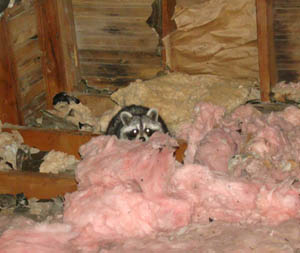
 Mostly nocturnal, raccoons are omnivores, and will feed on practically anything, ranging from mice and insects and small aquatic creatures to fruits and vegetables, and the contents of your garbage can. Though they don’t technically hibernate, they have a highly reduced level of activity throughout the winter. Raccoons forage heavily in the spring and summer, and primarily rely on their stored body fat during their winter rest period.
Raccoons are thought to be highly intelligent, able to learn and execute complex tasks quickly and remember them for years. They adapt to a variety of habitats, and will go wherever they can find an abundance of food.
Additionally, they may carry diseases, such as rabies and raccoon roundworm, which can be extremely debilitating to humans. It is important to avoid handling raccoons, as well as their urine and feces.
 Even when coming across baby raccoons – who may look sweet and innocent – it is best to call in professionals to remove them. If you do need to move the babies, be sure to use caution and wear rubber gloves. The mother raccoon licks her babies, and this saliva may also contain the rabies virus or other diseases.